Sexually Transmitted and Blood-Borne Infections (STBBIs): Understanding, preventing, and taking action

Sexually transmitted and blood-borne infections (STBBIs) remain a major public health issue. Several STBBIs are on the rise in Canada, particularly among young adults. However, they are often misunderstood, seen as shameful or not taken seriously. Understanding them better helps us protect ourselves and others.
What are STBBIs?
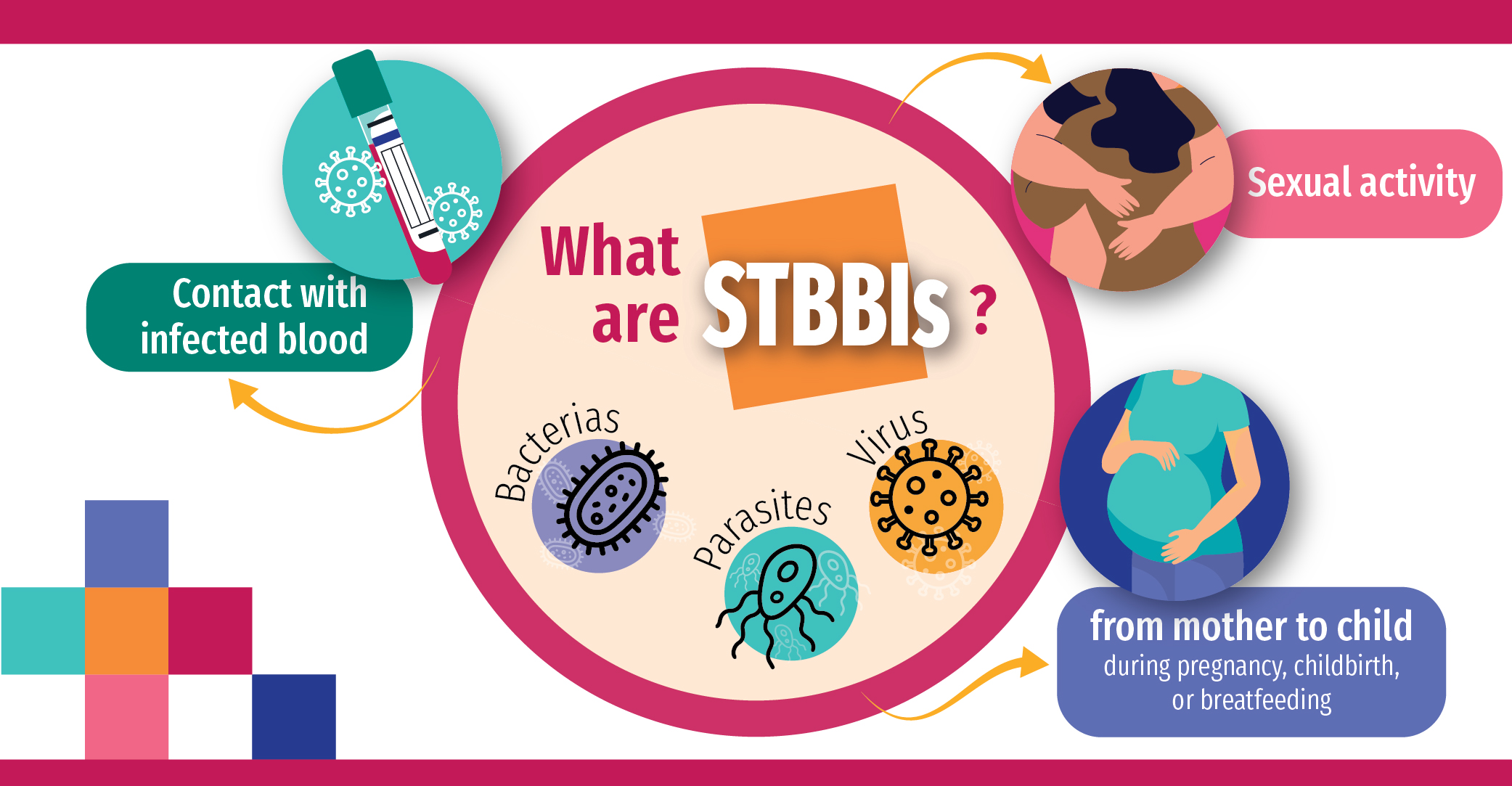
Figure 1. Microorganisms that cause STBBIs and the main routes of transmission.
STBBIs include several infections caused by bacteria, viruses, or parasites. They can be transmitted through sexual contact, contact with contaminated blood, or from mother to child (Figure 1). Anyone who is sexually active can get an STBBI, regardless of their age, gender, or sexual orientation.
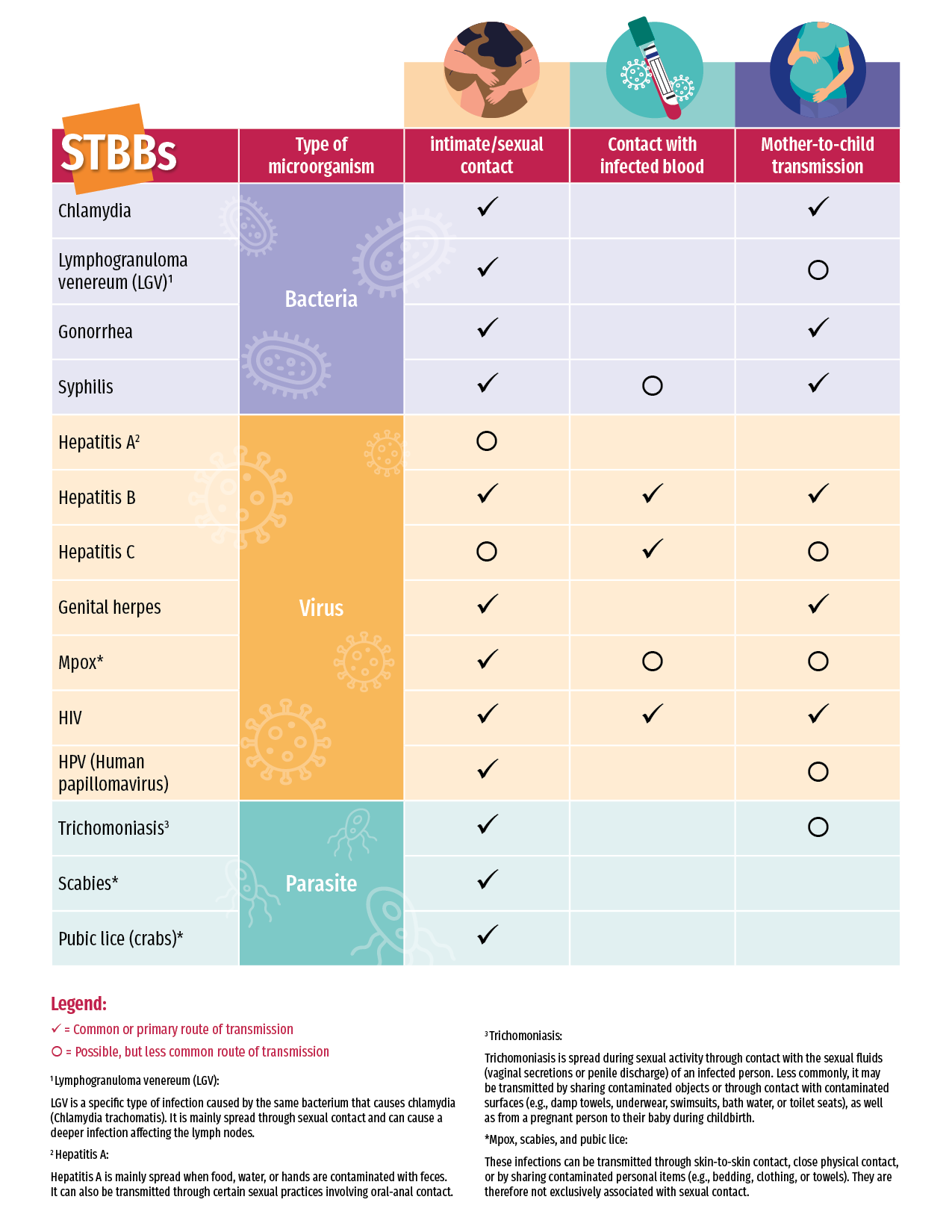
The table below presents some examples of STBBIs, the microorganisms that cause them, and their modes of transmission.
One of the biggest problems with STBBIs is that many of them do not cause any symptoms. That means that someone can have a STBBI without knowing it and pass it on to their partners without realizing it. If left undetected and untreated, some STBBIs can cause serious complications, such as:
- chronic pain;
- fertility problems;
- complications during pregnancy;
- an increased risk of getting or transmitting other infections.
How to reduce the risks?
There are several simple and effective ways to reduce the risk of getting or transmitting a STBBI:
- Use an external condom, an internal condom, or a dental dam (a protective barrier used during oral sex);
- Get tested regularly, especially when you have a new partner or multiple partners;
- Talk to a health care professional about PrEP (pre-exposure prophylaxis), a treatment that can help reduce the risk of contracting HIV;
- Use sterile equipment when using drugs;
- Ensure that sterile equipment is used for piercings and tattoos;
- Talk openly with your partners about your STBII test results;
- Consider getting vaccinated against HPV and hepatitis B.
Talking about STBBIs helps promote access to information and encourages safer behaviours. Sexual health is an essential part of overall health, and everyone deserves access to it in a respectful, confidential, and caring setting.
How can I get tested for STBBIs?
Getting tested means taking care of your health and the health of others. Many STBBIs can be treated effectively, and some can even be cured when detected early.
In New Brunswick, STBBI testing is simple, confidential, and accessible. Depending on the situation, this can be done by:
- A urine sample;
- A blood test;
- A swab from the throat, genital area, or anal area.
For more information on STBBIs, screening, treatment, or available resources:
- Check out New Brunswick sexual health resources;
- Contact your health care provider or your local Public Health office;
- Call 811 to speak with a nurse who can provide information and guide you to the right services.
Resources:
