Fewer visits for less urgent cases in Emergency Departments

Vitalité Health Network, Tuesday, January 3, 2026 – In recent months, the Network's hospital Emergency Departments have been increasingly used for situations that truly require immediate care.
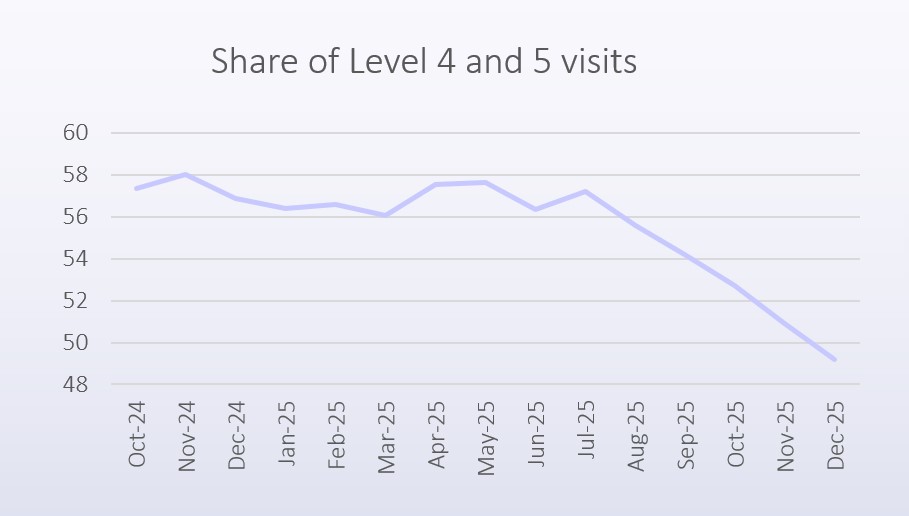
A downward trend has been observed in the proportion of Emergency Department visits for less urgent needs, known as level 4 and 5 visits. These situations involve health conditions that can often be managed by a family physician or nurse practitioner.
The proportion of these visits decreased from 58% in November 2024 to 49% in December 2025.
“This means that more people are receiving care outside the Emergency Department for less urgent needs. It is a sign that access to primary health care is improving in our communities,” said Dr. France Desrosiers, President and CEO.
Vitalité Health Network now supports 30 local family health teams across its four zones, which have added nearly 41,000 patients to their rosters. This model is based on collaboration among different health professionals to provide faster access to primary health care services.
To date, 22 teams are able to offer rapid access for minor emergencies, which helps reduce pressure on hospital emergency services.
“When Emergency Departments experience reduced overcrowding, teams can focus more effectively on true emergencies, and patients with less pressing needs receive more appropriate care in an environment better suited to their situation," explained Dr. Desrosiers.
The Network now publishes its system improvement indicators, including access to emergency services, on a quarterly basis. These indicators include the average wait time to see a doctor by triage level, as well as the wait time between the decision to admit a patient and obtaining an appropriate hospital bed. The Network has also committed to publishing wait times prior to triage.
“We want the public to be able to follow our progress and better understand the challenges we face. While we are leading projects within our Emergency Departments to improve processes, the delays observed primarily reflect pressures across the entire health system,” added Dr. Desrosiers. “The Emergency Department can no longer serve as the main point of entry to the system, and we will continue to work toward that goal. I commend our teams who work every day to improve hospital performance and access to care in the community.”
