Breastfeeding during emergencies

During a power outage, flood, storm or other emergency, breast milk is the safest way to feed your baby.
Why?
Breast milk is:
- always ready – no water, electricity or preparation is required;
- perfect for your baby – it contains everything your baby needs to grow;
- safe – it helps protect your baby from infections and keep them well hydrated;
- comforting – it helps your baby feel safe during a stressful time.
Stress and breastfeeding
Stress can slow down your milk flow, but that doesn't mean you don't have enough milk.
Breastfeed frequently. With support, you can maintain your milk supply, even during times of stress or in an emergency.
During a power outage
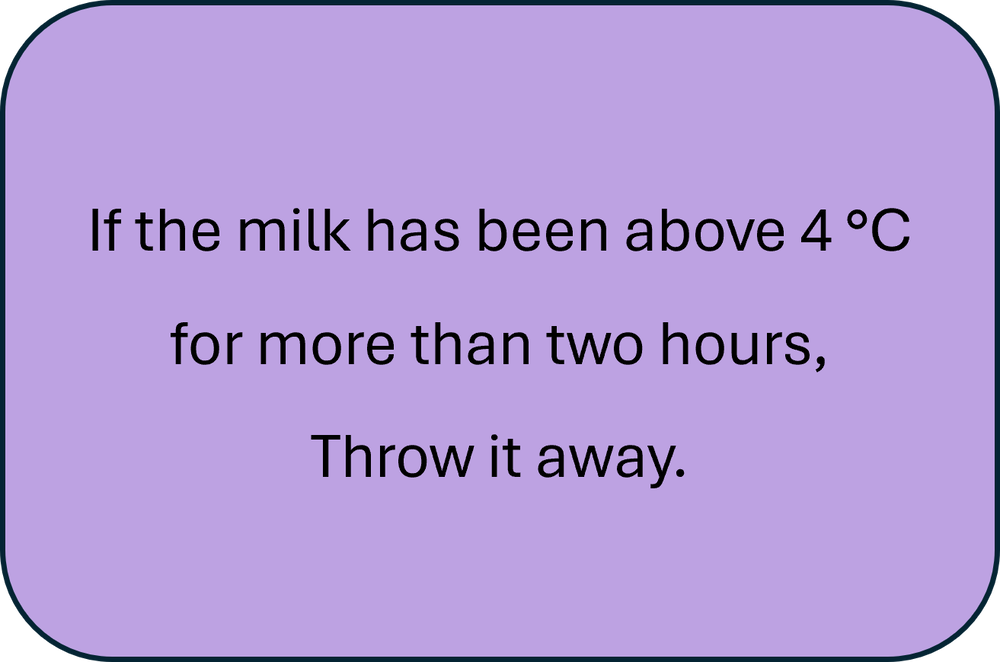
If the outage lasts 4 hours or less:
- keep the milk at the back of the refrigerator or freezer and avoid opening the doors;
- if possible, add ice to help keep the contents cold;
- using a thermometer, check that the refrigerator temperature remains at 4°C or below.
If the outage lasts more than 4 hours:
- keep breast milk on ice or in a cooler;
- if possible, take the milk to someone who has access to electricity.
Breast milk storage
- A full freezer will keep milk frozen for about 48 hours; a half-full freezer will keep it for about 24 hours.
- If the milk still contains ice crystals, it is safe to use and can be refrozen.
- If the milk is completely thawed but still cold, keep it in the refrigerator and use it within 24 hours.
If you express your milk
If you use a breast pump:
- During a power outage, an electric breast pump may not work.
- A manual or battery-powered breast pump can be a good option if you have access to clean water to clean it.
- You can also express your milk by hand.
- If your baby is able to breastfeed, breastfeed as often as possible.
- If you're using a cup, make sure it's clean.
Breastfeeding and infant formula
- If your baby is fed a combination of breast milk and infant formula, you can breastfeed more often during an emergency. This can help increase your milk supply and reduce the need for infant formula.
- It may be possible to resume breastfeeding even if you have already started weaning your baby. A lactation consultant can help you.
- When preparing infant formula, boil the water for two minutes, but not longer. If you can't boil the water, use a single-serving, ready-to-serve infant formula.
- Prepared infant formula must be refrigerated at 4°C (40°F) and used within 24 hours.
- If you can't safely clean feeding equipment, you can give your baby the milk in a clean disposable cup, if you have one.
- Throw away any bottle nipples or pacifiers that have come into contact with floodwater.
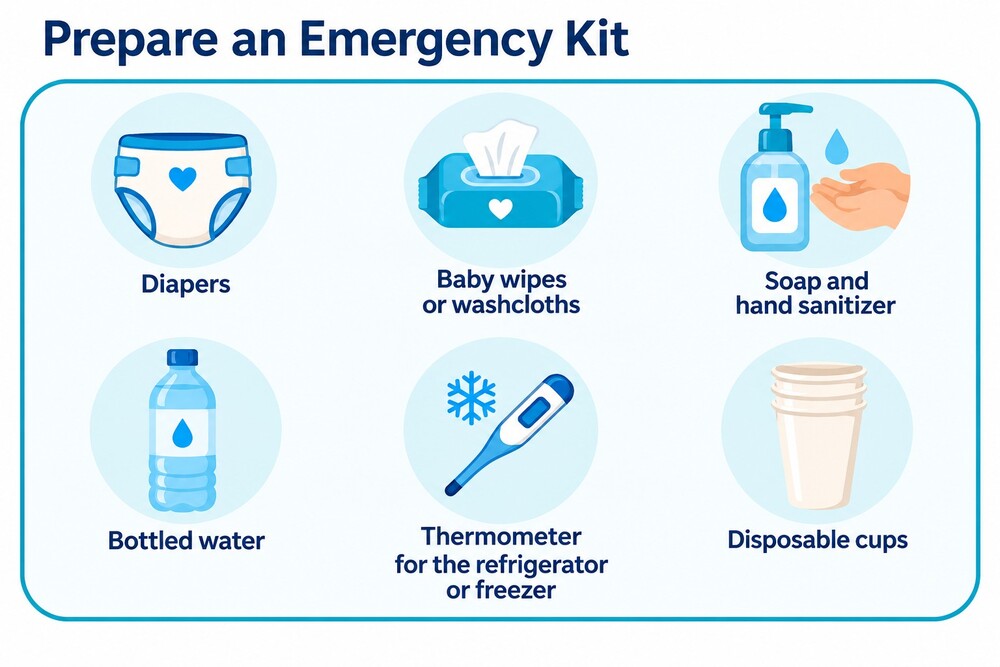
If you have any concerns about feeding your baby during an emergency, ask for help. Contact your health care professional, public health office or your region’s emergency information service to find out what resources are available.
References
Breastfeeding Protocol: Expressing, Collecting and Storing of Human Milk
colour-final-6-4-20-pdf-1-reduced.pdf
https://www.nshealth.ca/infant-feeding-emergency-preparedness
