All you need to know about skin-to-skin contact: benefits, safety and resources
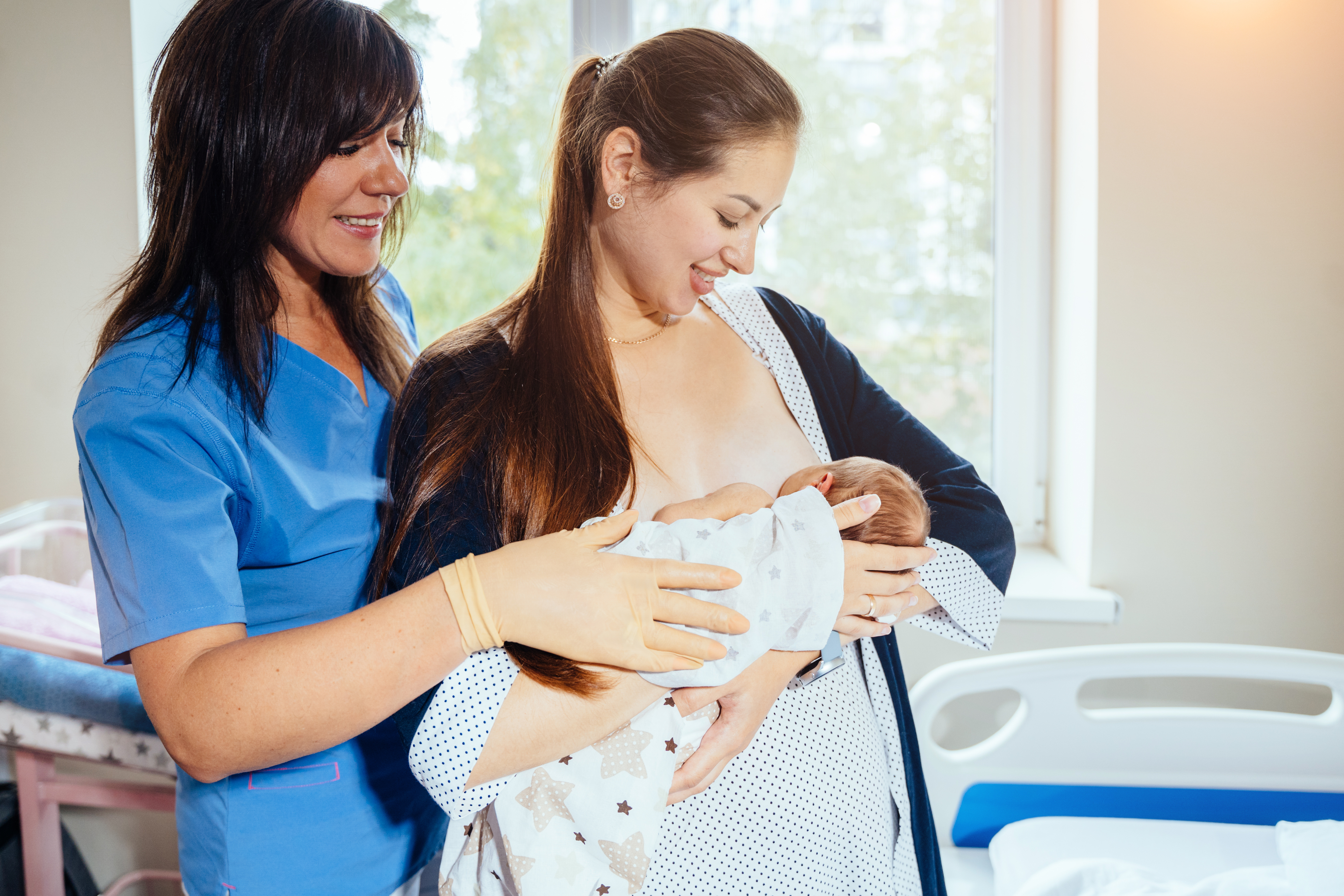
To round off National Breastfeeding Week, we are highlighting a simple and comforting practice that offers numerous benefits for both baby and parent: skin-to-skin contact.
This practice involves placing your unclothed baby directly against your bare chest. It can start as soon as the baby is born and continue throughout the first few weeks and months of their life.
“The Magical Hour”: the first hour after birth
When your health and your baby’s health permit, skin-to-skin contact should begin immediately after birth and continue uninterrupted for at least the first hour or until the end of the first feeding. This period is sometimes referred to as “The Magical Hour.” It allows your baby to warm up, settle down, become familiar with you and show signs that they are ready to feed. Skin-to-skin contact therefore supports early feeding and helps establish breastfeeding.
During this time, initial checks, observations and some care can be carried out while your baby remains on your chest.
However, the benefits of skin-to-skin contact can continue well beyond this first hour.
Skin-to-skin contact during the first few weeks
You can continue to practice skin-to-skin contact during your hospital stay and once you return home, as often as you and your baby wish.
This practice may be particularly comforting when your baby is crying, fussy, having difficulty falling asleep and or showing signs that they are ready to feed.
Skin-to-skin contact may also:
- Stimulate milk production
- Help make breastfeeding easier
- Help your baby stay calm
- Strengthen the bond between you and your baby
- Help you feel calm and confident
Every moment of skin-to-skin contact counts; even a few minutes can be a precious moment with your baby.
When your baby needs special care
Skin-to-skin contact is also beneficial for babies who need additional care.
If your baby is admitted to the neonatal intensive care unit, skin-to-skin contact, also called “kangaroo care,” is encouraged as soon as it can be practiced safely.
If separation is necessary after birth, you can begin skin-to-skin contact as soon as you and your baby are reunited and it is safe for both of you.
Even if it cannot begin immediately after birth, every moment of skin-to-skin contact remains beneficial.
Practicing skin-to-skin contact safely
To ensure your baby’s safety during skin-to-skin contact:
- Sit in a semi-reclined position
- Choose a well-lit area so you can see your baby well
- Hold your baby against your chest, facing you
- Make sure you can always see their face and check that their nose and mouth are clear
- Keep their head turned to one side and slightly raised
- Make sure your baby can move their head and chest freely
- Position their legs in a bent, frog-like position
- Check that their skin retains its normal colour
Are you feeling tired or sleepy?
Skin-to-skin contact should be practiced when you are alert and can watch your baby. If you are feeling very tired, put your baby in a safe place or ask someone else who is awake to take over.
